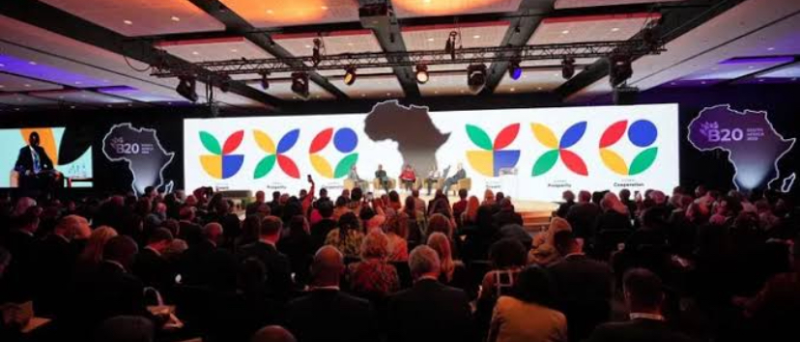
As the official voice of the global business community to the G20, the B20 South Africa has finalized a set of policy recommendations designed to advance inclusive, sustainable, and resilient economic growth. Structured through eight task forces, the proposals reflect the priorities of business leaders across the globe, while elevating Africa’s unique perspectives and challenges to the G20 stage.
1. Digital Transformation
The digital economy remains central to growth and inclusion. B20 South Africa urges the G20 to:
- Expand affordable and inclusive digital infrastructure.
- Embed digital literacy and AI education in all levels of learning.
- Strengthen governance and ethics in the use of emerging technologies.
- Advance interoperable digital public infrastructure for cross-border efficiency.
2. Employment and Education
With youth unemployment and skills mismatches persisting worldwide, the recommendations highlight:
- Greater investment in early childhood education.
- Stronger alignment between training systems and labor market demands.
- Expanded pathways to youth employment.
- The removal of barriers to women’s participation in the workforce.
- Support for MSMEs and entrepreneurship development.
3. Energy Mix and Just Transition
Recognizing the urgent need to transition to cleaner energy while protecting livelihoods, B20 South Africa calls for:
- Scaled-up transition financing.
- Localisation of clean energy manufacturing.
- Training programs for the green jobs of the future.
- Investment in resilient grids and infrastructure.
4. Finance and Infrastructure
Closing the infrastructure gap requires stronger financial mechanisms. The task force proposes:
- Enhanced early-stage project preparation to unlock pipelines.
- Expanded blended finance and public-private partnerships.
- Greater transparency in cross-border financial flows.
- Mobilization of long-term capital for infrastructure development.
5. Industrial Transformation and Innovation
Global competitiveness will depend on how well industries adapt. Recommendations include:
- Co-creation of industrial strategies between business and government.
- Boosting SME competitiveness and integration into value chains.
- Deepening regional trade and supply chain linkages.
- Promoting the adoption of green and digital technologies in manufacturing.
6. Integrity and Compliance
To strengthen trust in the global economy, the task force emphasizes:
- Leveraging technology to combat corruption.
- Enhancing transparency in sustainability and climate finance.
- Scaling up collective action initiatives to embed integrity in business practices.
7. Sustainable Food Systems and Agriculture
Agriculture and food systems must be made more resilient and equitable. The recommendations include:
- Strengthening agri-food supply chains against shocks.
- Expanding farmer access to technology, finance, and markets.
- Supporting inclusive livelihoods, especially for women and youth.
- Integrating trade policy into food security strategies.
- Accelerating the adoption of sustainable farming practices.
8. Trade and Investment
Finally, B20 South Africa highlights trade as a vital engine of inclusive growth, recommending:
- Restoring stability and predictability in multilateral trade systems.
- Enhancing Africa’s competitiveness through deeper AfCFTA integration.
- Embedding climate responsiveness into trade policy frameworks.
Through these eight task force recommendations, B20 South Africa positions itself as both a global partner and a regional advocate. The proposals underscore the continent’s determination to drive inclusive development, shape sustainable transitions, and ensure Africa’s voice carries weight in the G20 dialogue.