


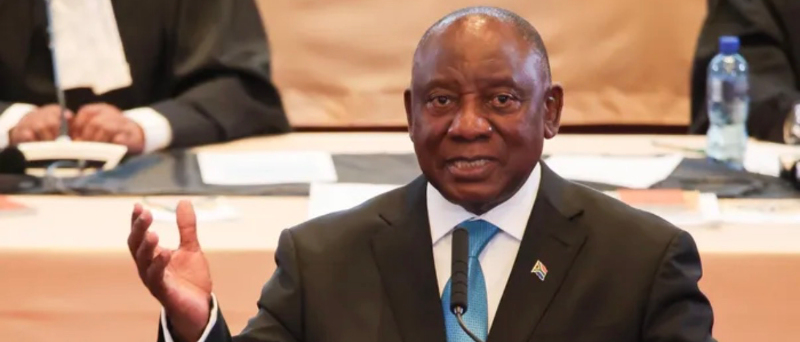
South Africa’s 2026 State of the Nation Address will be remembered less for soaring rhetoric and more for a single underlying expectation: delivery.
In a political climate shaped by the Government of National Unity (GNU) and an economy still navigating structural headwinds, the address carried a clear subtext reform momentum must now translate into measurable outcomes. Simply put, 2026 must be the year of implementation.
For years, South Africa has produced well-crafted policy frameworks and reform roadmaps. The challenge has rarely been vision; it has been execution.
This year’s address acknowledged that reality. Economic growth, fiscal discipline and investor confidence were presented not as abstract goals, but as results that must flow from accelerated structural reform. Public-private partnerships, regulatory certainty and infrastructure investment were framed as instruments of delivery not discussion points.
Energy reform remains foundational. Continued private sector participation in generation and expansion of transmission capacity were reaffirmed. The focus has shifted from stabilising crisis conditions to building long-term competitiveness.
Similarly, rail and port reforms were positioned as urgent implementation priorities. Improving logistics performance is no longer optional it is central to restoring trade efficiency and industrial growth.
The business community has broadly welcomed these commitments, but with a consistent caveat: timelines, accountability and measurable milestones will determine credibility.
Youth unemployment remains South Africa’s defining socio-economic challenge. The expansion of employment incentives, entrepreneurial support and alignment of skills with emerging industries such as digital technology and the green economy are necessary steps.
Yet the private sector’s response underscores a shared understanding impact will be judged not by announcements, but by absorption rates and job numbers created.
The address reiterated commitments to combat corruption and strengthen prosecutorial capacity. Implementing state capture recommendations and reinforcing institutional accountability were framed as governance priorities.
In the current coalition environment, political stability and institutional credibility are no longer peripheral concerns; they are economic fundamentals.
Political reactions reflected both divergence and convergence. The African National Congressdescribed the speech as pragmatic and reform-driven. The Democratic Alliance supported structural reforms but emphasized the necessity of disciplined implementation. The Economic Freedom Fighterscalled for deeper structural transformation, while the Inkatha Freedom Party stressed accountability and service delivery.
Despite ideological differences, there is broad recognition that economic urgency demands coordinated action.
Corporate South Africa responded with cautious confidence. Energy reform, logistics liberalisation and policy continuity were viewed positively. However, reform fatigue remains a reality. Investors are watching the next 12 to 18 months closely, aware that sustained growth will depend on disciplined follow-through.
Markets reflected this balanced sentiment stable, but attentive.
If 2025 was about stabilisation and coalition formation, 2026 must be about performance. Implementation is not a technical exercise; it is a leadership test.
For government, it will determine legitimacy. For business, it will shape investment appetite. For the nation, it will define whether reform becomes recovery.
South Africa has the frameworks, the partnerships and the stated intent. What remains is execution.
2026 must be the year implementation moves from aspiration to action and from promise to proof.

Copyright © Leaders Journal | Designed by: Leopash Media