



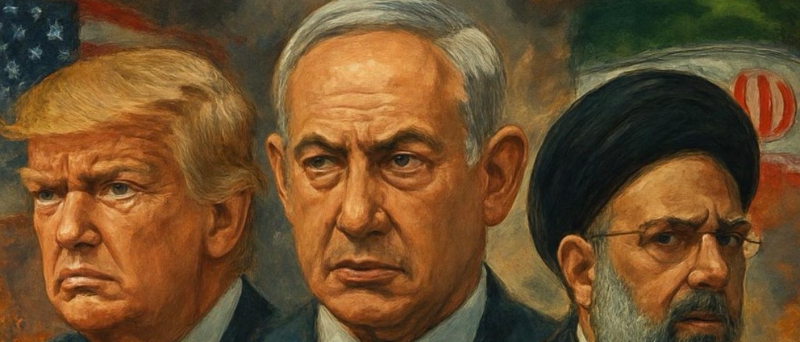
A simple guide to understanding a complex conflict
A is for Ancient Roots
The story begins long before modern politics. The land between the Mediterranean Sea and the Jordan River is sacred to Jews, Christians, and Muslims.
For Jews, it is the ancient homeland of Israel.
For Muslims, Jerusalem is home to the Al-Aqsa Mosque, one of Islam’s holiest sites.
For Christians, it is where Jesus lived, died, and rose again.
Because this land carries deep spiritual meaning, it is not just political territory — it is identity, history, and faith.
B is for Britain and Borders
After World War I, the Ottoman Empire collapsed. Britain took control of the region under what was called the British Mandate. During this time Jewish migration increased, Arab communities feared losing their land and Tensions grew between the two groups. In 1947, the United Nations proposed dividing the land into two states: one Jewish, one Arab. The Jewish leadership accepted. Arab leaders rejected the plan.
War followed
C is for Creation of Israel
In 1948, the state of Israel was declared. Neighboring Arab countries attacked. Israel survived and expanded its territory. For Israelis, this was independence. For Palestinians, it was displacement. Hundreds of thousands fled or were forced from their homes. They call this event the Nakba (“catastrophe”). Two peoples. One land. Two very different memories.
D is for Disputed Land
Today, the core dispute centers on Gaza, The West Bank, East Jerusalem. The Hamas controls Gaza. The Palestinian Authority governs parts of the West Bank. Israel controls security over much of the territory. Israel says it needs security. Palestinians say they need freedom and statehood.
E is for Escalation
Violence rises in cycles. In October 2023, Hamas launched a deadly attack inside Israel. Israel responded with large-scale military operations in Gaza. Civilians on both sides have suffered greatly. Thousands have died. Entire neighborhoods have been destroyed. Families live in fear. This conflict is no longer just local. It affects the entire region.
F is for Foreign Powers
The Middle East war is not isolated. The United States strongly supports Israel. Iranbacks groups like Hamas and Hezbollah. Neighboring countries such as Egypt, Jordan, and Lebanon are directly affected. When global powers take sides, local wars become regional risks.
G is for Grief
Beyond politics are people. Israeli families grieving loved ones lost in attacks. Palestinian families grieving children lost in bombings. Hostages. Prisoners. Displaced communities. War statistics are numbers. Grief is human.
H is for Hope
Despite decades of conflict, many still believe peace is possible. The most discussed solution is the “two-state solution”: An independent Israel, An independent Palestine and a Living side by side in peace. But trust is low. Leadership is divided. Trauma runs deep. Yet history shows even long wars can end when courage, compromise, and leadership align.
The Middle East war is not just about land. It is about History, Religion, Identity, Security, Justice and Power.

Copyright © Leaders Journal | Designed by: Leopash Media