


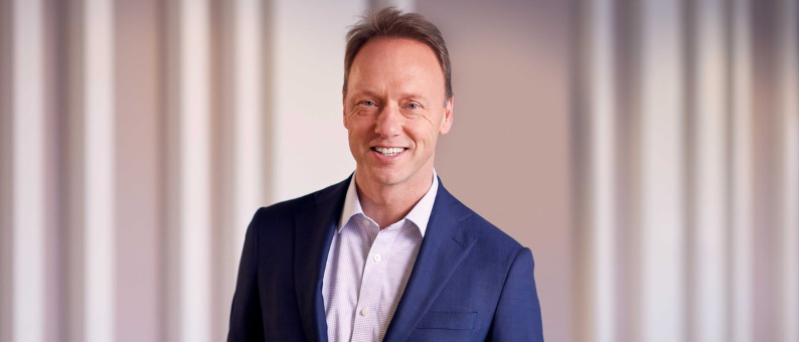
When Fernando Fernandez walked into Unilever’s London headquarters in March 2025 as the company’s new CEO, he didn’t waste time signaling his intent. Known for his blunt style and relentless focus on execution, Fernandez now plans one of the boldest leadership shake-ups in the consumer goods giant’s 95-year history.
In a move that has rattled the company’s upper ranks, Unilever will replace roughly a quarter of its top 200 managers a decision Fernandez says is vital to eliminate what he calls “pockets of mediocrity” at the heart of the business.
Unilever, the maker of household staples from Dove soap to Hellmann’s mayonnaise, has struggled to keep pace with faster-moving rivals. Once seen as the gold standard of brand building, the company has been accused of bureaucracy, sluggish innovation, and scattershot priorities problems that worsened after a failed takeover bid by Kraft Heinz in 2017.
Fernandez, a Brazilian-born executive who previously ran Unilever’s beauty and wellbeing division, has made it clear: business as usual is no longer an option.
“We can’t afford inconsistency at the top,” he told investors recently. “Leadership must meet market benchmarks nothing less.”
The overhaul is not just about people it’s part of a radical transformation plan designed to reposition Unilever as a sharper, faster, and more growth-focused organization. Already, the company has shed 18% of its white-collar workforce in just 18 months. Ahead lies the elimination of 7,500 more office jobs by 2026.
At the same time, Fernandez is steering Unilever away from legacy businesses. Its R330 billion ice cream division (formerly €15 billion), home to Magnum and Ben & Jerry’s, is being spun off into a separately listed company in Amsterdam later this year. By shedding slower-growth units, Fernandez hopes to channel investment into high-potential categories like beauty, personal care, and nutrition.
The new strategy also has a geographic tilt. While Europe remains important, the CEO is clearly eyeing the U.S. and India as Unilever’s growth engines. Both markets offer scale, youthful demographics, and rising consumer spending power—factors that could supercharge the company’s top line if managed effectively.
For South Africa, Unilever’s shake-up carries both opportunities and challenges.
Employment Impact: South Africa is home to several of Unilever’s regional offices and manufacturing plants. While Fernandez’s cuts are primarily at the global executive level, the broader cost-saving initiatives—such as the reduction of office-based roles—could lead to job restructuring locally. Analysts predict some administrative and management positions may be consolidated, although frontline manufacturing jobs are likely to remain stable.
Market Strategy: With the company refocusing on high-growth markets, South Africa could see increased investment in fast-moving consumer goods, particularly beauty and personal care products. Local brands under Unilever, such as Lifebuoy and Sunlight, may receive renewed marketing and product innovation support to capture market share.
Competitive Pressure: Smaller, agile South African FMCG players could feel the effects of Unilever’s new efficiency-driven approach. A leaner, faster Unilever may raise the bar for product innovation, distribution, and pricing, forcing local competitors to adapt or risk losing shelf space.
“South Africa remains a strategic market in Africa,” says industry analyst Thabo Mokoena. “Fernandez’s global strategy could translate into more aggressive local campaigns and product launches, but also tighter operational controls.”
What sets Fernandez apart from predecessors is his emphasis on decisive execution. He is pushing managers to act on “70% certainty,” rejecting the company’s traditional culture of exhaustive planning and consensus-driven decision-making. The message is simple: move fast, take calculated risks, and don’t get bogged down.
That cultural reset may be as significant as the structural changes. By pruning leaders unwilling or unable to adapt, Fernandez hopes to foster a performance-driven environment that rewards bold thinking and accountability.
Unilever’s turnaround is being watched closely by shareholders, who have grown weary of underperformance. Fernandez has promised:
R17.6 billion in cost savings by 2026 (with R14.3 billion expected by the end of 2025).
3%–5% annual sales growth.
An operating margin above 18.9% in 2025.
These are not modest ambitions for a company with more than R1.32 trillion in annual revenue, but investors have shown cautious optimism.
For Unilever, the stakes could not be higher. The consumer goods landscape is brutally competitive, with smaller insurgent brands and digital-first players chipping away at market share. Fernandez’s gamble—refreshing a quarter of his leadership team and streamlining operations—could either reignite Unilever’s edge or deepen its struggles.
For South Africa, it’s a time of cautious watchfulness: the potential for stronger, faster-growing brands exists, but so does the risk of local job restructuring and increased competitive pressure. Either way, the message is loud and clear: mediocrity has no place in the Unilever of tomorrow.

Copyright © Leaders Journal | Designed by: Leopash Media